
Keep cargo within reach.
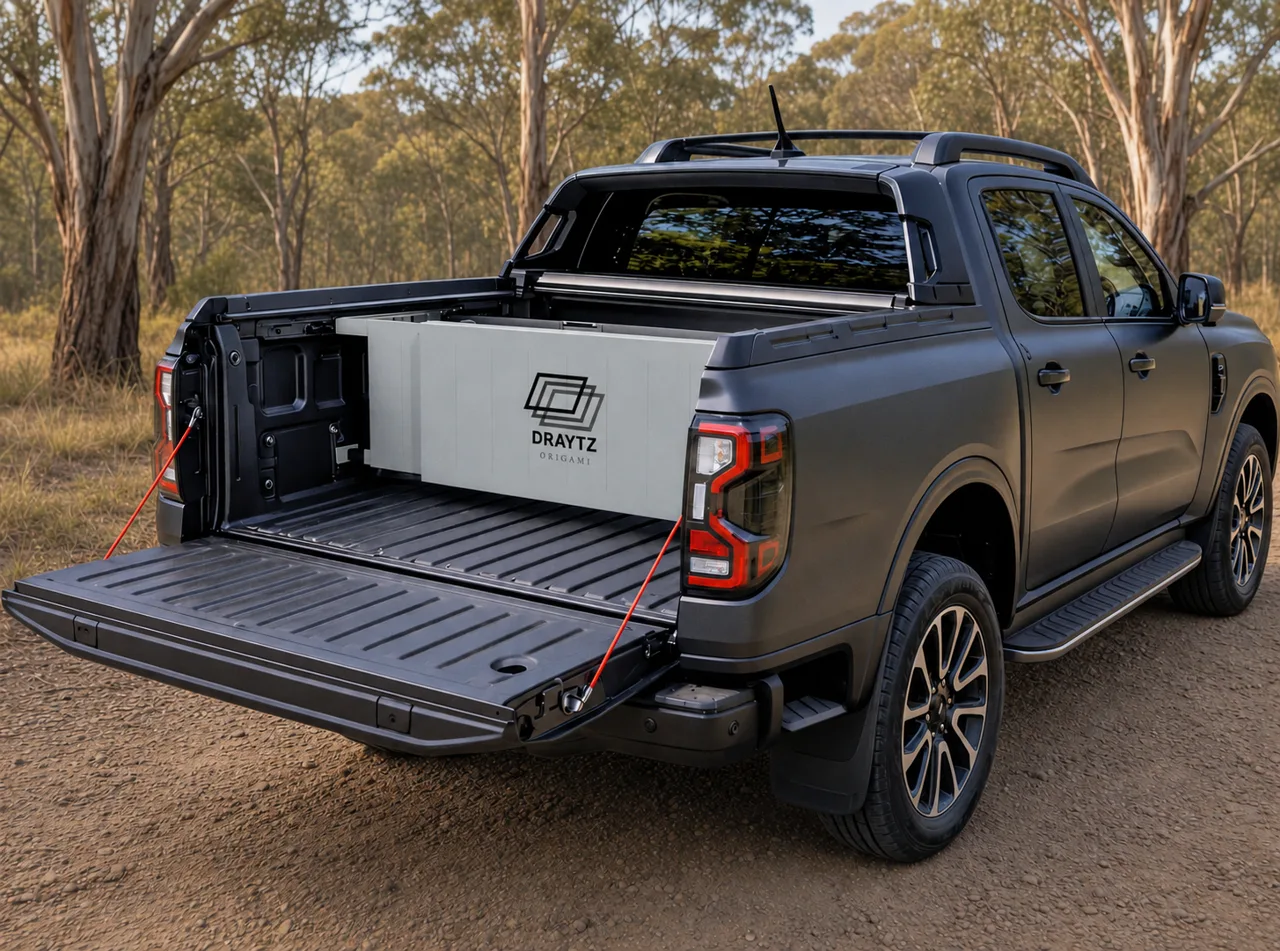
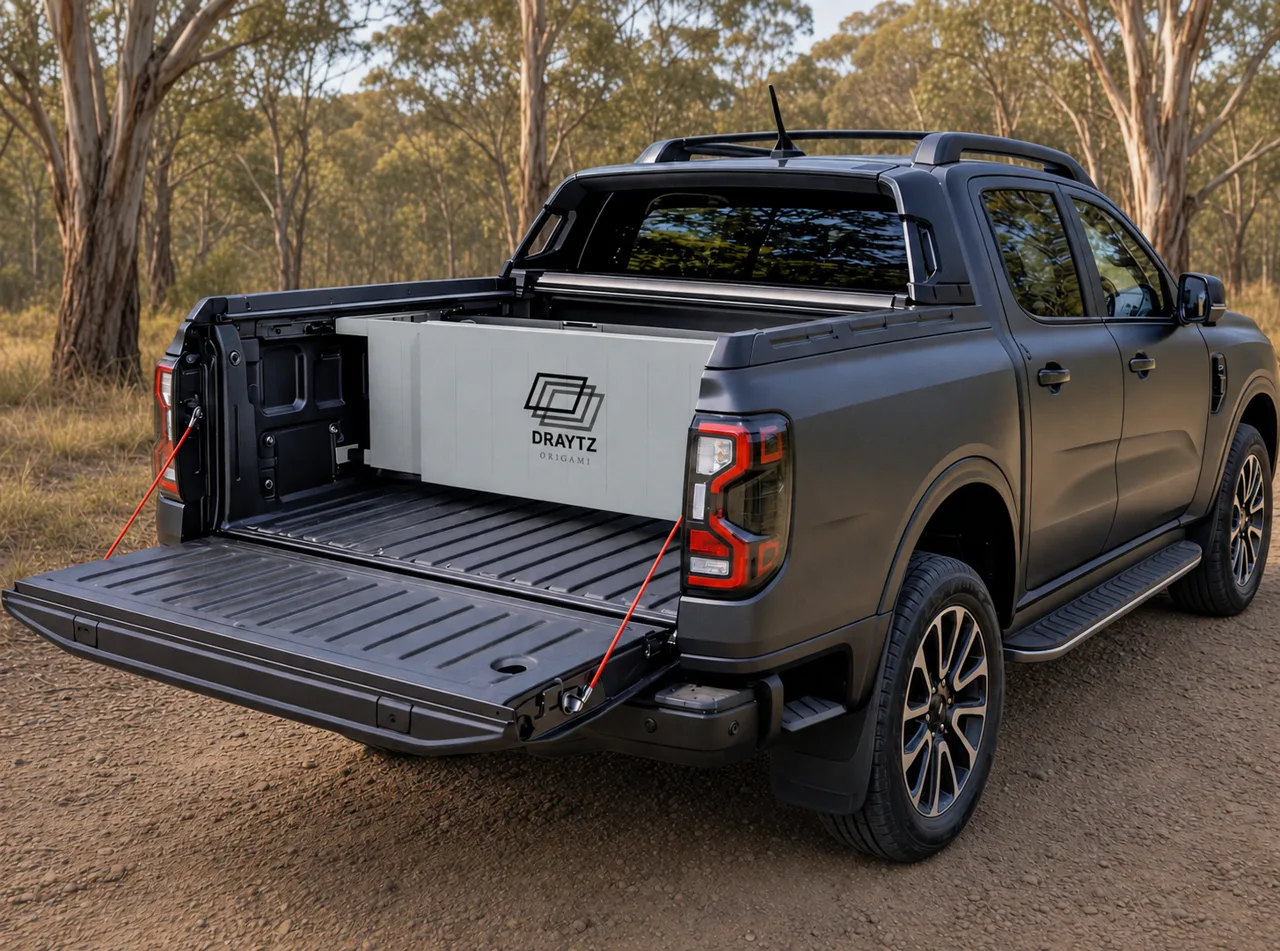
Groceries and pool supplies slid along the slippery tub liner. Climbing in to retrieve them quickly got old. I wanted a secure divider that could work across the tub, including between the wheel arches.
OUR STORY / FROM BRISBANE, AUSTRALIA
A family car upgrade. A few everyday frustrations. And an idea I couldn’t leave alone.
I’m the creator behind Draytz Origami, based in Brisbane, Australia.
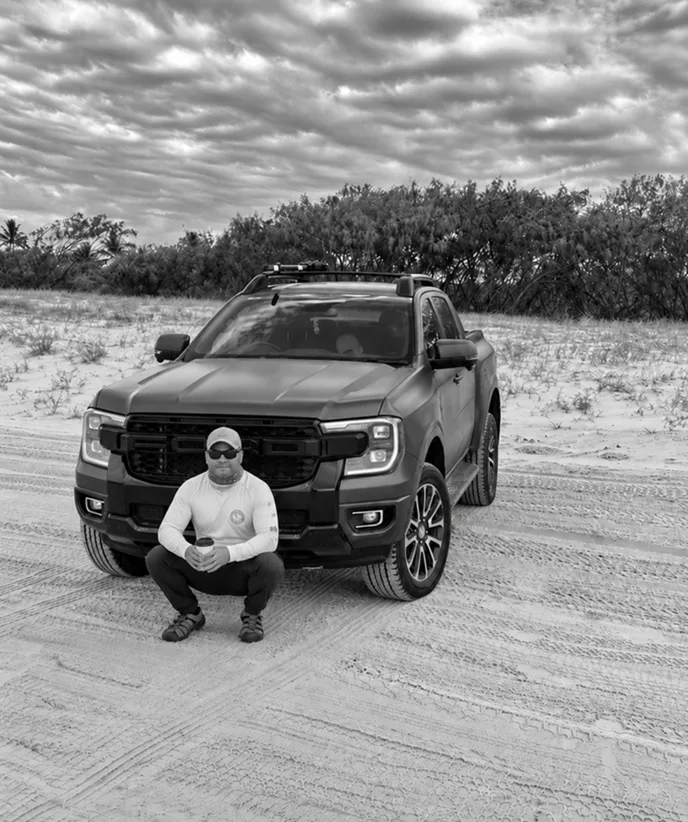
In early 2024, I traded a family sedan for a Ford Ranger. It opened up a world of camping trips, beach tracks and home projects and soon became part of the school run and supermarket shop, too.
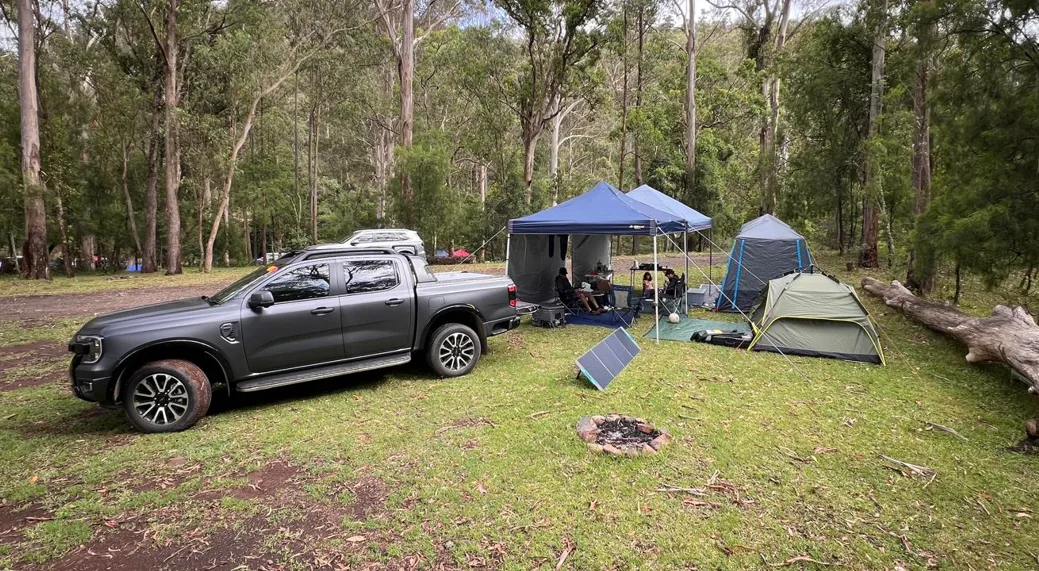
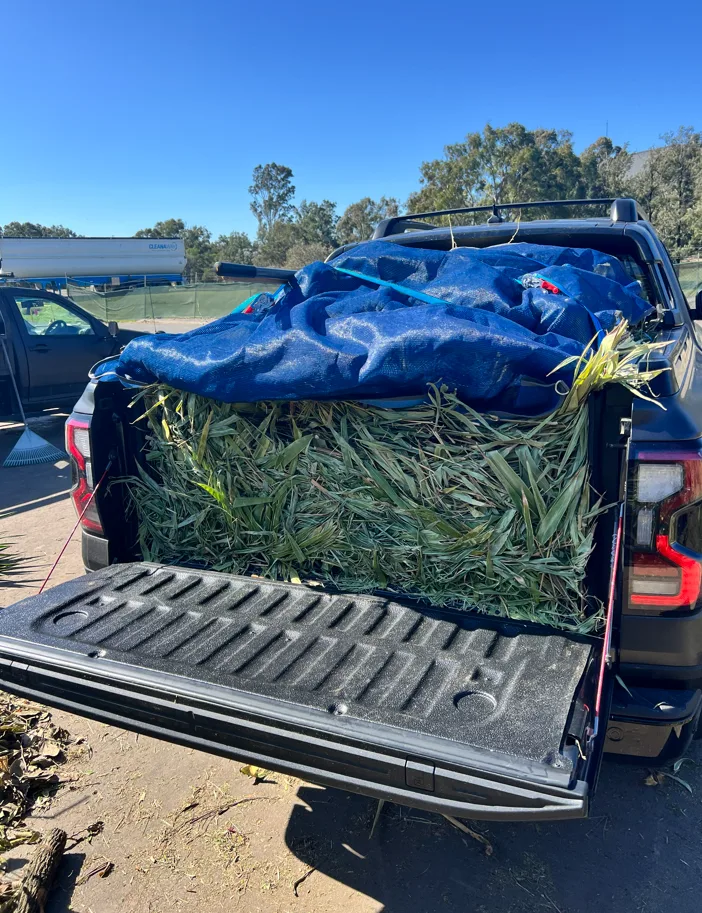
I wanted something that made the tub more useful every day, without adding more things to pack. That’s where this story begins.
Follow the journey ↓THE PROBLEM STATEMENT
The ute could take us almost anywhere. Making the most of its space was another story. I wanted a simple, practical design that anyone handy with basic tools could adjust to suit their needs.
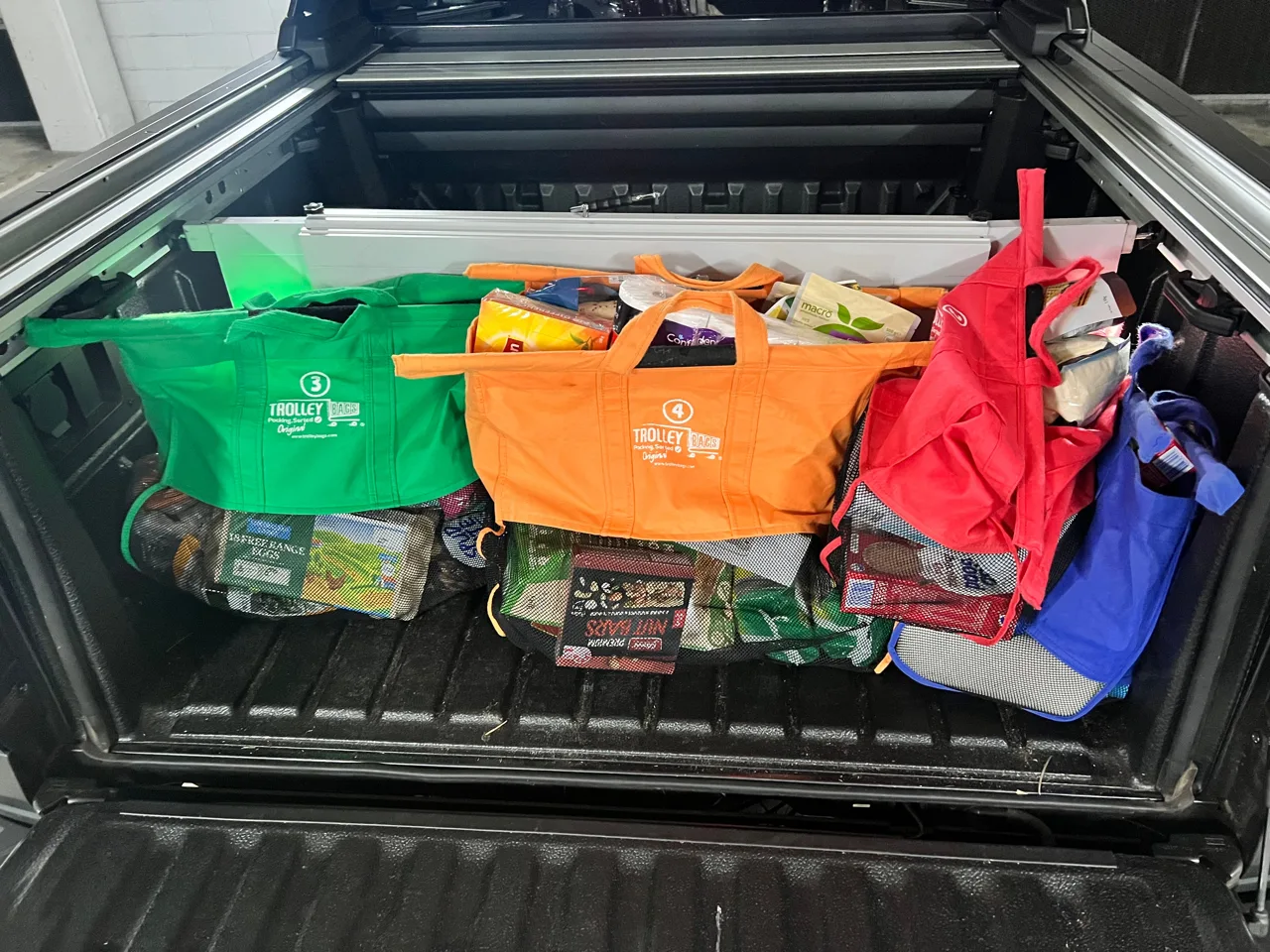
Groceries and pool supplies slid along the slippery tub liner. Climbing in to retrieve them quickly got old. I wanted a secure divider that could work across the tub, including between the wheel arches.
Whether it was a wheeled gazebo, a mountain bike or a large four-legged friend, getting them into a high tub isn't always easy. A ramp would help if it was already there when I needed it.
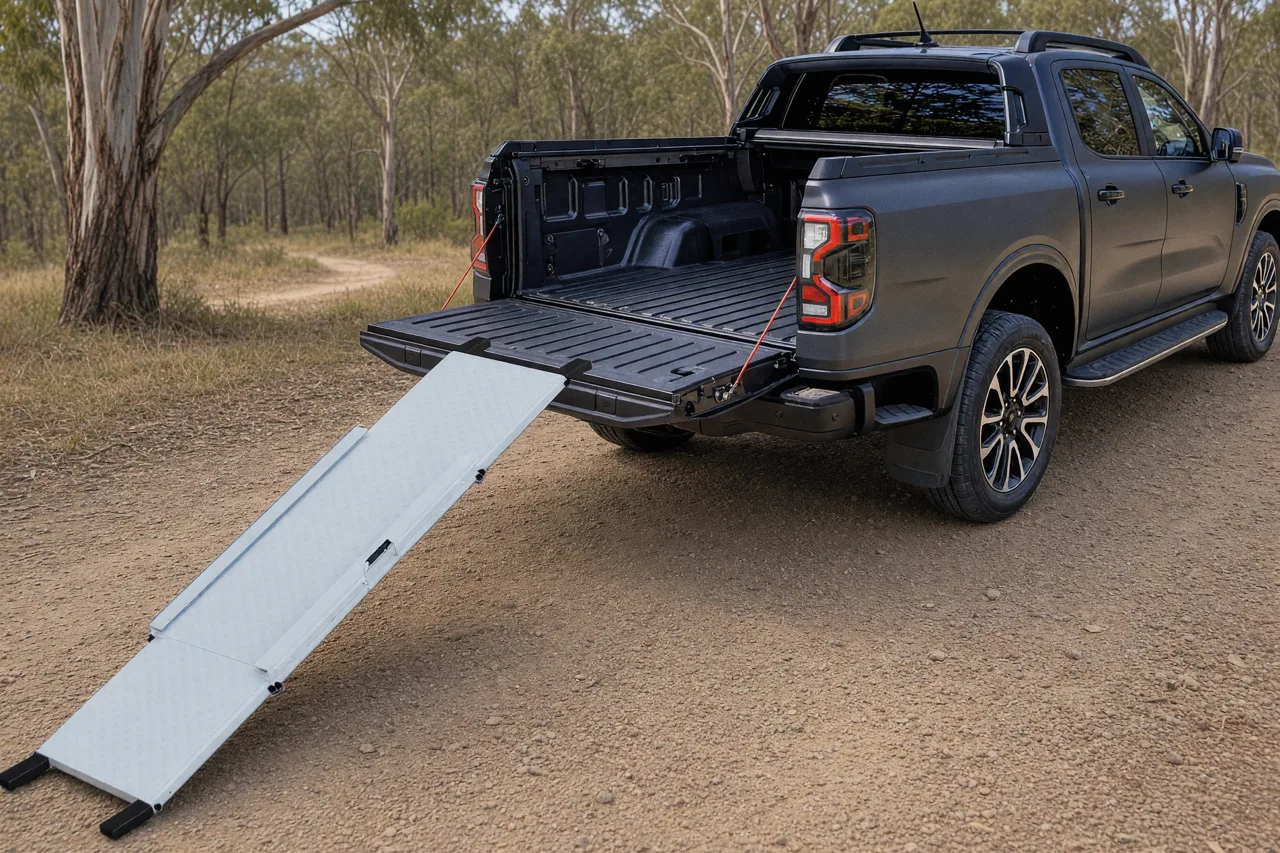
Camping gear fills a tub surprisingly quickly. Bringing a separate table meant finding room for yet another accessory.
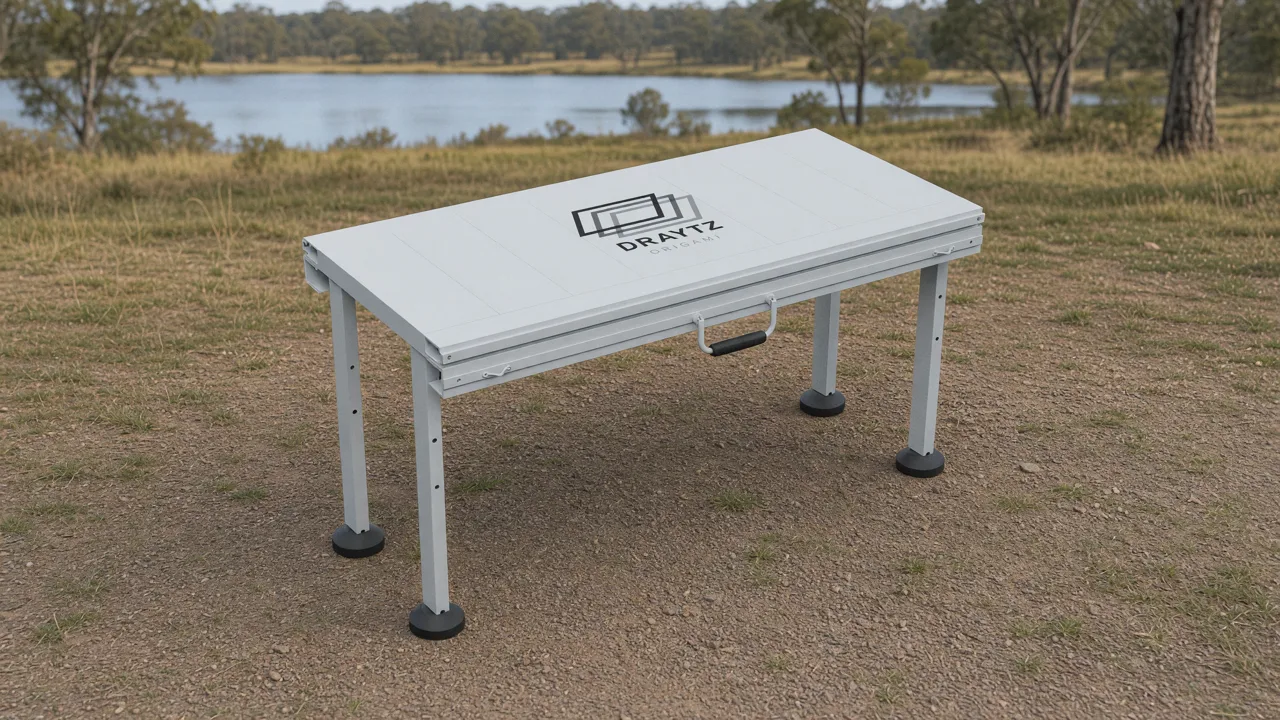
A divider. A ramp. A table.
What if one system could do all three?
THE JOURNEY / 2024 TO NOW
From early sketches to sand tracks, each step taught us something for the next.
Early 2024
After switching from a family sedan to a Ford Ranger, I loved the freedom a ute offered. But cargo slid out of reach, loading heavier gear was awkward, and camping equipment quickly filled the tub. A divider, ramp and table all needed a surface. Could one product do all three?
March 2024
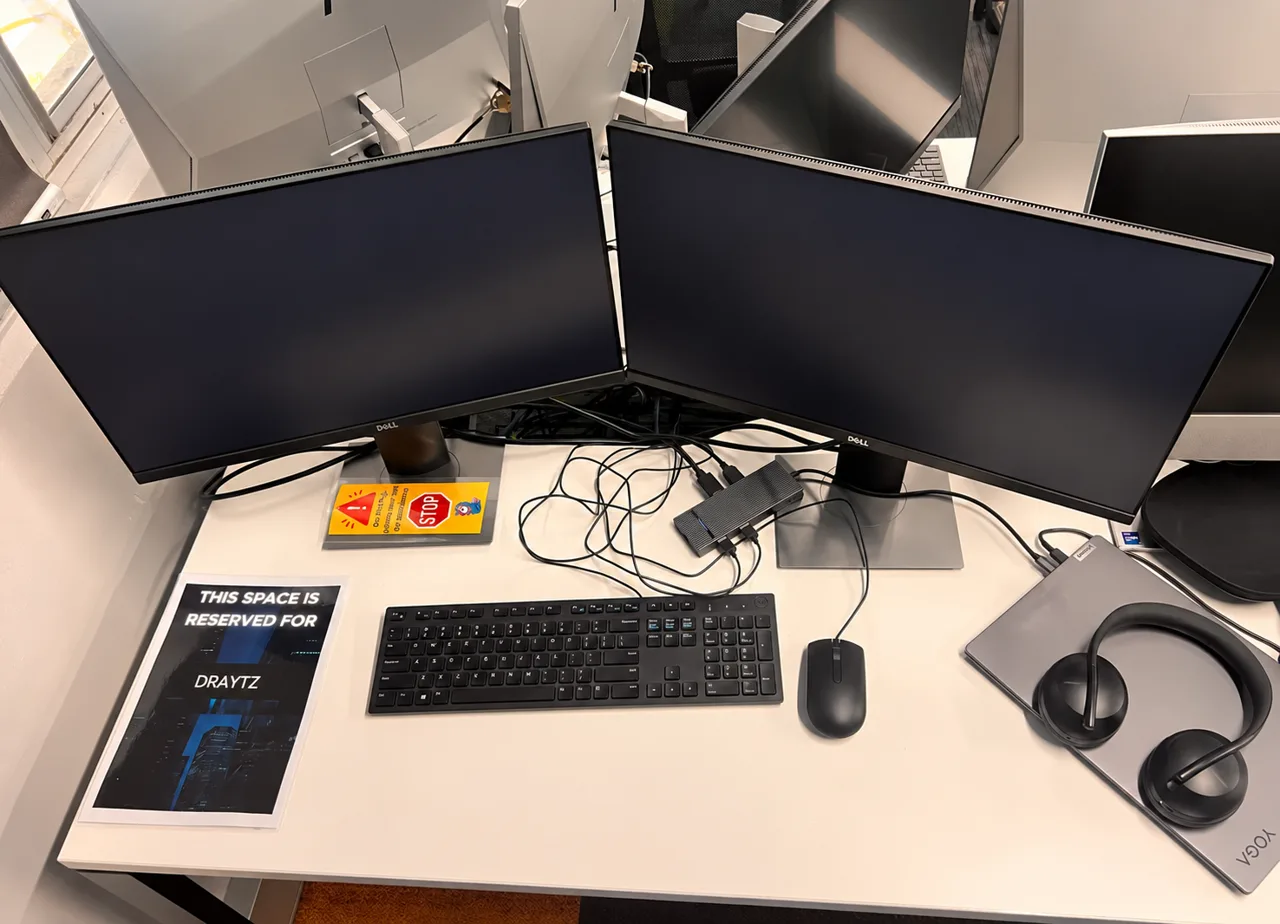
After speaking with Australian and international firms, I partnered with Morpho to turn the idea into a design, a working prototype and a path towards manufacturing. We started with the practical jobs the product needed to do, then worked through how to combine them.
Mid–late 2024
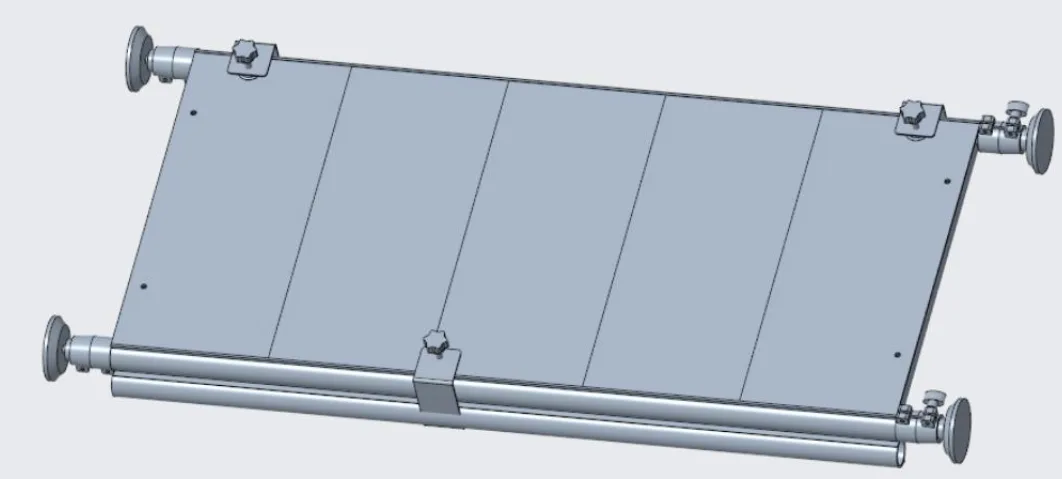
Industrial and mechanical design developed together over several iterations. The goal was useful versatility without complicated mechanisms: straightforward adjustments and components that could be sourced or repaired in the field. CAD designs became a bill of materials, with supply-chain feedback shaping the first prototype.
Early 2025
Manufacturing brought another round of small design changes. Morpho’s engineers assembled and assessed the first prototype, resolving issues with the manufacturers before shipping it to Brisbane. Its temporary logo featured Ollie, my Labrador and unofficial project mascot.
INSIDE THE WORKSHOP
February 2025
The prototype became a regular fixture in my Ranger. Shopping, loading gear and setting up a table showed what worked and where adjustments were needed. I recorded the issues and sent them back to the design team, turning everyday use into the next design brief.
May 2025
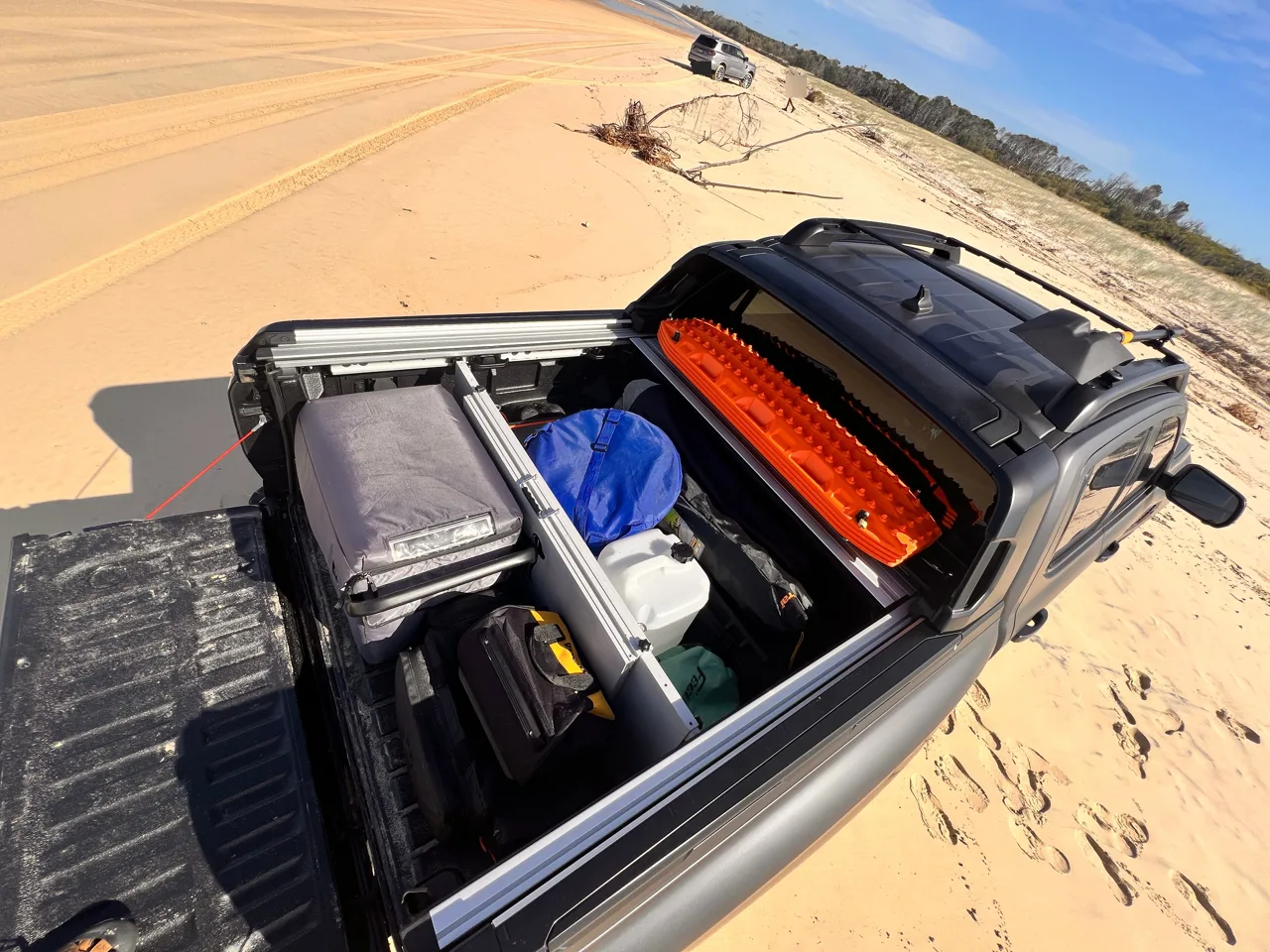
Rough inland tracks, soft sand and coastal conditions put the prototype through a different kind of use. The divider kept the fridge and recovery gear separate from the rest of the load and within reach. The trip gave us practical feedback on how the product behaved away from smooth roads.
August–September 2025
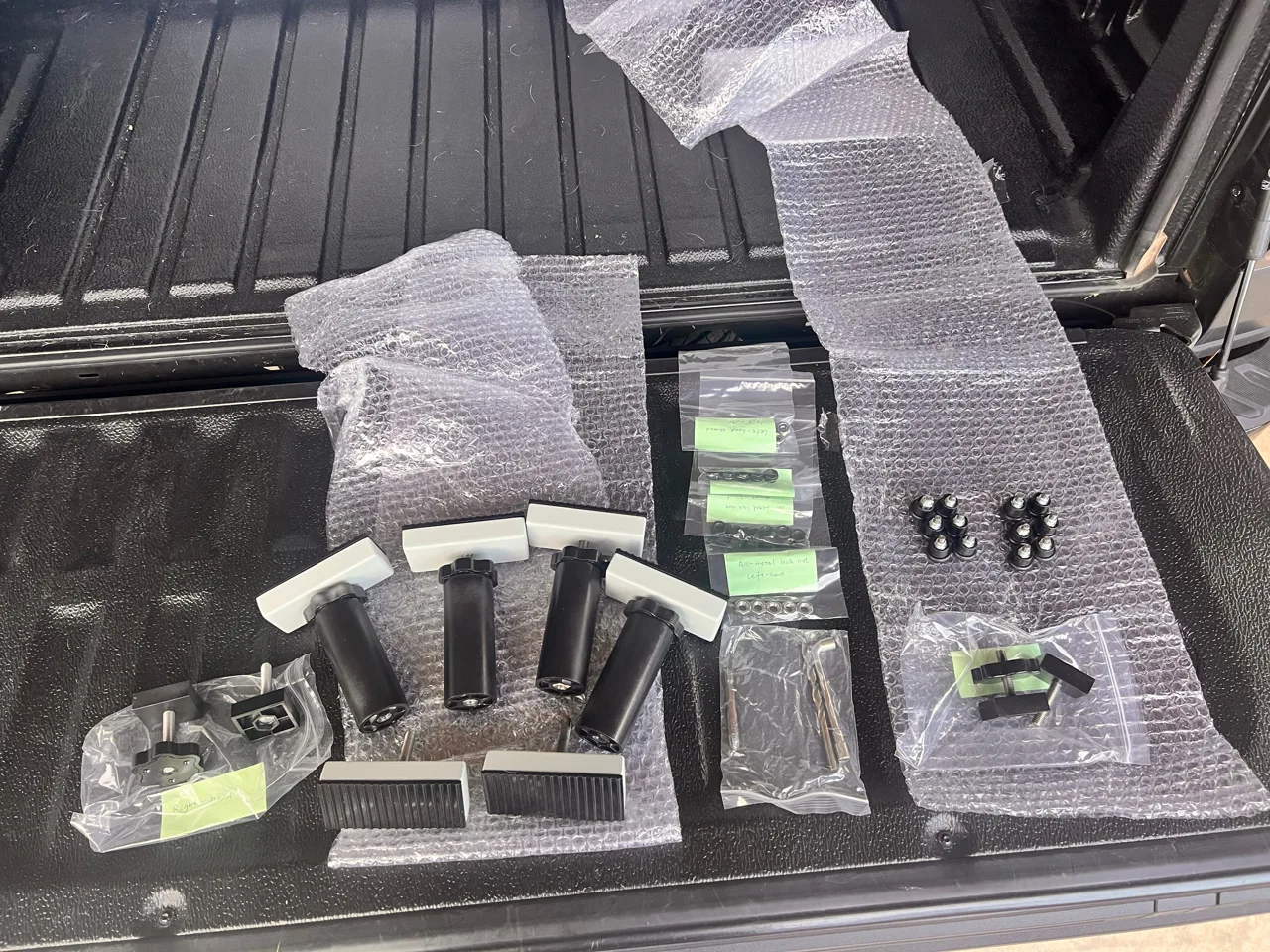
Months of regular use informed changes to materials, fitment and component positions. Even the smallest components were upgraded to stainless steel and aerospace-grade aluminium, with strength and corrosion resistance in mind. A key focus was improving divider stability with both C-rail and friction mounting, while making the system easier to adjust and use.
October–December 2025
After supply-chain feedback, the next components were made for retrofitting to the original prototype body. Parts were 3D printed or machined for this stage, rather than produced with final manufacturing tooling. Workshop checks came before shipping the revised parts to Brisbane.
January 2026
The new parts were fitted and put back into regular use. Stability improved, and a few smaller adjustments were identified for the next design review. This cycle of using it, recording what happens and improving it kept the development grounded in how people actually use a ute.
May 2026
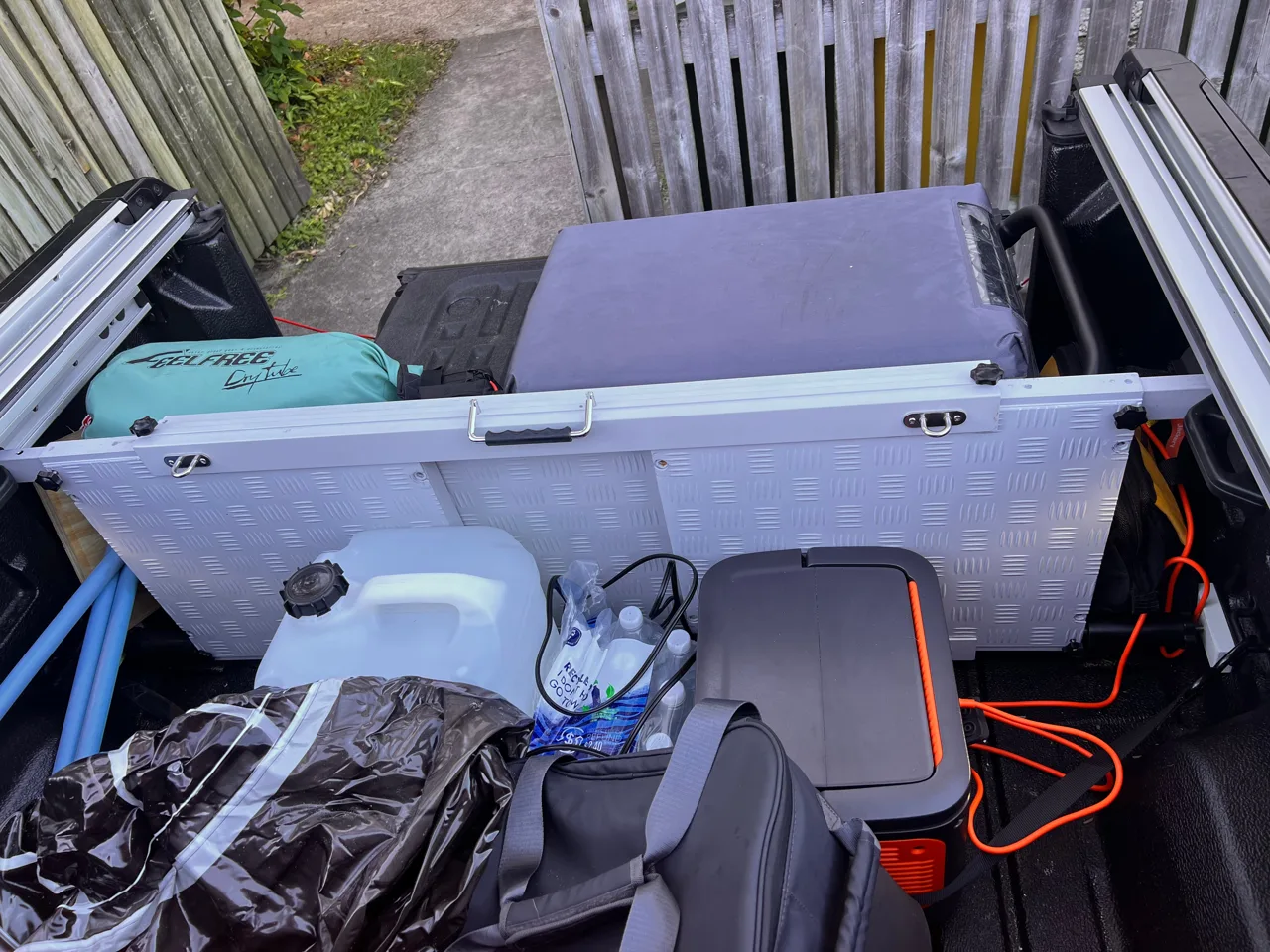
A second trip to K’gari put the revised components to the test in demanding off-road conditions. The changes were working well, with a retractable ratchet strap becoming part of my setup for securing a power station and water can. After more than a year of prototype testing and refinement, we were ready for the next stage.
May 2026
The design work and supporting documentation came together for a provisional patent application with IP Australia, filed in May 2026. Another milestone in the journey from a personal frustration to a product.
MID 2026 ONWARDS / THE NEXT CHAPTER
Now we’re working with Prelaunch.com to understand what prospective customers need and prepare for the next stage.
Getting here has meant making, using and improving a real working prototype. The next step is market validation: hearing from people who could use Origami and understanding where it fits into their lives.
True validation came on the days I needed my full ute tub for landscaping waste disposal. Whenever I pulled the Draytz out and was slow to put it back in, school bags immediately slid out of reach into the far corners, and my kids would complain, “Why did you take the Draytz out?”
Tom, founder of Draytz
Thanks for following the journey.
Tom
Supporters & Partners

HQ at Queensland University of Technology Foundry in Brisbane.
Design and manufacturing is led by Morpho, who've helped over 1,100 founders bring 2,000+ products to market.

Working with Prelaunch.com, with over 2,000 brands and 1 million community members, for market research and validation.
Trusted by brands including Bosch, Ducati, 3M, P&G, Audi, Haier and Philips.
Join the Draytz Origami prelaunch list for early-access offers, launch updates, and first pricing details.